
Integrated Design Trends in Vehicle Energy Storage and Portable Charging

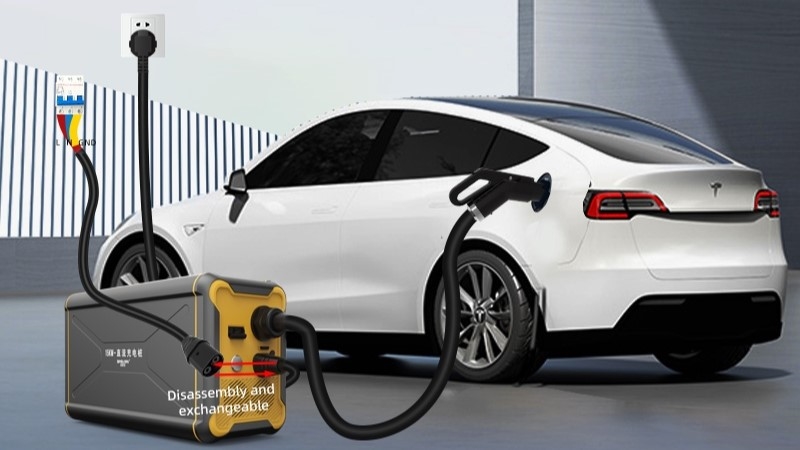
 The rise of electric vehicles (EVs) is transforming the automotive industry. Consumers now demand faster charging speeds, extended driving ranges, and seamless energy management. As a result, integrated designs combining vehicle energy storage with portable charging solutions are shaping the next generation of EV infrastructure.
Unlike traditional standalone chargers, modern portable EV charging systems incorporate battery storage, intelligent energy distribution, and modular charging architectures. These solutions allow drivers to charge vehicles anytime and anywhere, enabling higher flexibility and reducing reliance on fixed charging stations.
This article explores the technical innovations, market dynamics, and design trends driving the evolution of vehicle energy storage and portable charging integration.
I. Evolution of EV Charging and Energy Storage
Over the past decade, EV adoption has accelerated due to environmental policies, battery cost reductions, and consumer demand. However, charging infrastructure remains a critical challenge.
1. Traditional Charging Limitations
Conventional EV charging systems rely heavily on grid availability and fixed installations. In remote areas or during emergencies, drivers face range anxiety due to limited station density.
2. Integration of Energy Storage
Integrating high-capacity energy storage modules with EV charging systems addresses these gaps. Portable chargers equipped with built-in lithium-ion or solid-state batteries provide on-demand charging without requiring immediate grid access.
This capability enhances user independence and ensures greater mobility across diverse environments.
II. The Rise of Portable EV Charging Solutions
1. Enhanced Flexibility and Convenience
Modern EV portable chargers combine compact form factors with high-output charging power. Users can store energy in advance and recharge vehicles anywhere, even where traditional stations are unavailable.
Such products cater to:
-
Long-distance travelers
-
Emergency roadside assistance
-
Off-grid applications
2. Intelligent Power Management
Advanced portable chargers feature smart energy distribution algorithms that balance charging speeds, battery health, and efficiency. They adapt dynamically to:
-
Vehicle battery capacity
-
Environmental temperature
-
Available stored energy
This ensures optimal charging performance while protecting both the charger and the vehicle battery.
3. Modular and Scalable Designs
Manufacturers increasingly adopt modular architectures. Users can expand storage capacity by adding battery packs or upgrading charging speeds via interchangeable modules.
This modularity reduces product obsolescence and supports customized solutions for different vehicle types.
III. Integration of Vehicle Energy Storage Systems
A key innovation in EV technology is vehicle-to-everything (V2X) integration, where vehicles act as mobile energy hubs.
1. Vehicle-to-Load (V2L) Capabilities
EVs equipped with bidirectional charging systems allow stored energy to power external devices. This transforms vehicles into portable power stations, ideal for outdoor activities, emergency relief, or temporary infrastructure needs.
2. Vehicle-to-Grid (V2G) Interaction
Energy stored in EV batteries can also feed back into the power grid, supporting load balancing and renewable energy integration. Combined with portable chargers, V2G capabilities enhance grid stability and reduce peak demand.
3. Synergy with Portable Chargers
By pairing portable energy storage with vehicle-based systems, users gain multi-layered energy redundancy. Drivers can draw from onboard reserves or portable packs depending on specific scenarios.
IV. Key Technologies Powering Integration
1. High-Density Battery Solutions
Advancements in solid-state batteries, lithium iron phosphate (LFP) cells, and graphene-enhanced electrodes have significantly improved energy density, charging speeds, and safety. These developments make portable storage lighter, more compact, and more efficient.
2. Fast-Charging Protocols
Emerging standards such as CCS, CHAdeMO, and GB/T now support ultra-fast charging up to 350kW. Portable chargers increasingly incorporate these protocols, ensuring compatibility with diverse EV platforms.
3. Intelligent Thermal Management
Efficient heat dissipation is critical to maintain battery safety during rapid charging. Integrated systems leverage:
-
Liquid cooling loops
-
Phase-change materials
-
AI-driven thermal prediction algorithms
These technologies extend product lifespan and improve reliability.
4. IoT-Enabled Connectivity
Portable EV chargers now integrate cloud-based monitoring and smartphone controls. Users can track:
-
Charging status
-
Remaining capacity
-
Real-time performance diagnostics
Connectivity enhances user experience and simplifies energy management.
V. Market Trends Driving Demand
1. Expanding EV Ownership
Global EV adoption continues to surge, creating greater demand for portable charging solutions to complement public infrastructure.
2. Off-Grid and Emergency Applications
Governments and fleet operators prioritize mobile energy access for disaster relief, remote construction, and defense operations. Portable chargers provide an uninterrupted power supply in unpredictable conditions.
3. Integration with Renewable Energy
Combining solar panels with portable storage creates self-sustaining charging systems. These hybrid designs align with global decarbonization goals while reducing grid dependency.
Conclusion
The convergence of vehicle energy storage and portable charging technologies marks a significant milestone in EV evolution. By combining high-density batteries, modular architectures, and smart energy management, integrated solutions enable uninterrupted mobility and greater energy independence.
As EV adoption accelerates and charging demands diversify, portable charging systems will remain essential for extending infrastructure reach, supporting renewable integration, and enhancing user experience. Manufacturers embracing innovation and interoperability will drive the next wave of advancements in EV energy ecosystems.